
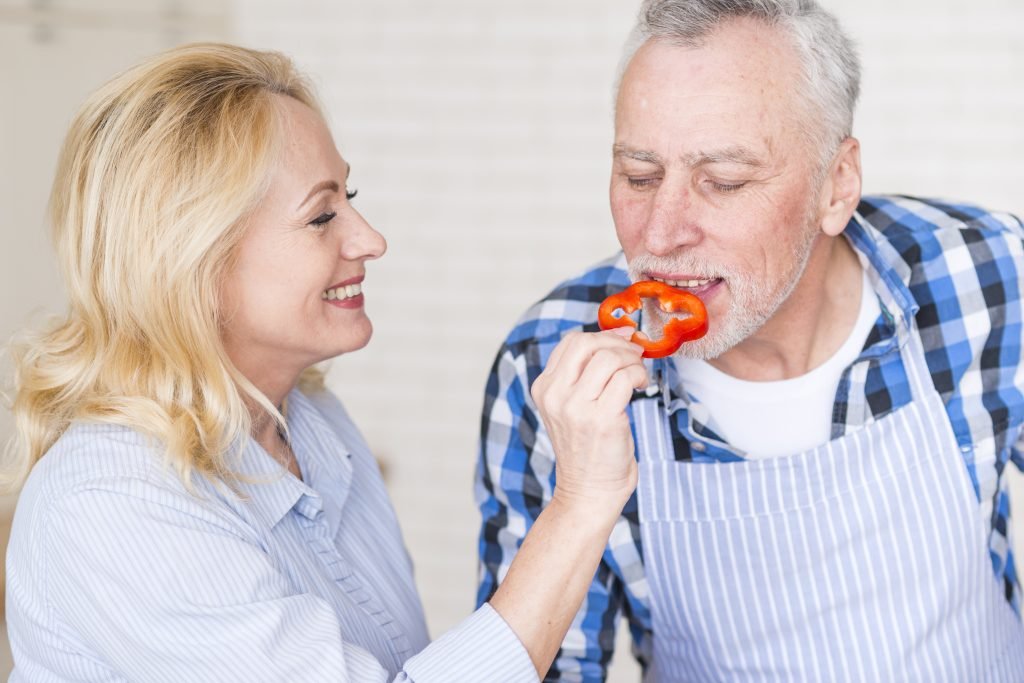
Getting dentures changes a lot of things, but food is one of the adjustments that catches people off guard the most. It’s not that you can never enjoy a proper meal again; it’s that certain foods that never gave you a second thought before can now cause real problems. Some will dislodge your dentures at the table. Others will damage them over time. A few are more subtle than that.
This guide covers the food categories worth avoiding, why each one is an issue, and what you can eat instead so mealtimes stay enjoyable rather than stressful.
Foods That Must Be Avoided With Dentures
Hard and Crunchy Items
Hard foods put uneven, concentrated pressure on specific points of the denture. Unlike natural teeth, which are anchored in the jaw, dentures rest against the gum tissue with no rigid connection point. That means any sudden force, particularly a biting force, can cause the denture to rock, crack, or shift.
Foods in this category to avoid:
- Whole nuts: almonds, walnuts, hazelnuts
- Hard sweets and boiled confectionery
- Ice; chewing it is a surprisingly common habit that causes denture fractures
- Popcorn kernels; the soft puffs are fine, but un-popped or partially-popped kernels are a problem
- Crusty bread and hard rolls, particularly the end pieces
- Raw carrots, celery, and other firm raw vegetables in large pieces
- Corn on the cob; the bite force required places enormous strain on the front teeth of the denture, where the fit is naturally less stable
The risk here isn’t always immediate breakage. Repeated stress on the same points gradually weakens the denture material, and one day, something crunchy is the final straw. Better to cut things into smaller pieces than to find out the hard way.
Sticky and Chewy Foods
Sticky foods are perhaps the most disruptive category for denture wearers day-to-day. The problem is two-fold: sticky foods cling to the denture’s fitting surface, which can break the seal between the denture and the gum tissue, and they can physically pull the denture out of position mid-bite.
Sticky candies, toffee, and chewing gum are probably the best-known foods to avoid. Chewing gum in particular is genuinely stubborn; it wraps around the denture and creates real difficulty. But it’s not just the obvious sticky snacks:
- Chewy meats: jerky, dried meat, tough steak cuts
- Chewy bread and dense bagels
- Caramel and toffee-based confectionery
- Peanut butter in thick amounts; fine in modest quantities on soft toast
- Dried fruit, particularly larger pieces
Chewy meats deserve a specific mention. Tough cuts of beef or pork require sustained, repetitive chewing on the same side, which shifts the denture out of its resting position and strains the gum tissue beneath it. Tender, slow-cooked meat is a much better option and honestly often tastes better anyway.
Small Grains, Seeds, and Fibrous Foods
This category gets far less attention than it should in most guides, and it’s one of the more genuinely frustrating day-to-day issues for denture wearers.
Small grains and seeds are particularly problematic because they slip beneath the denture base and press against the gum tissue. Even a single sesame seed can cause significant discomfort if it ends up trapped under a lower denture. Foods to be cautious with:
- Sesame seeds and poppy seeds on breads and rolls
- Quinoa and couscous in substantial amounts
- Corn kernels; corn on the cob is an issue for different reasons, but loose corn can also migrate beneath the fitting surface
- Small, crunchy snacks like seeds or grain crackers
Certain raw leafy greens and fibrous vegetables also present challenges. Sautéed spinach, for example, tends to wrap around and stick to teeth in ways that can be difficult to manage with dentures. Raw spinach leaves are even more problematic. Cooked or softened versions of most vegetables work considerably better.
Very Hot and Very Cold Foods and Drinks
Dentures act as an insulating layer between the temperature and the mouth’s natural sensory tissue. This means wearers often notice reduced temperature sensation, which sounds fine in theory but creates a different problem: it becomes easier to accidentally burn the palate or gum tissue before realising the food or drink is too hot.
Be cautious with:
- Very hot soups and broths; allow them to cool before eating
- Hot drinks; sipping slowly rather than drinking in large mouthfuls gives time for the mouth to register temperature
- Foods straight from the oven
- Very cold or frozen items, particularly those eaten directly, like ice lollies
This is less about the dentures themselves being damaged and more about protecting the gum tissue underneath them.
What You Can Eat: A Practical Comparison
Knowing what to avoid is useful, but knowing what works well is equally important. Most people find their diet actually broadens once they’ve learnt the alternatives.
| Food to Avoid | Better Alternative |
| Whole nuts | Nut butters on soft bread |
| Corn on the cob | Corn cut from the cob, cooked soft |
| Raw carrots and celery | Steamed or roasted vegetables |
| Chewy meats and jerky | Slow-cooked or braised meats, fish |
| Hard crusty bread | Soft bread, pitta, or lightly toasted slices |
| Sticky sweets | Yogurt, soft fruit, smooth desserts |
| Ice | Room temperature or cool drinks |
| Tough steak | Minced meat, tender poultry, fish fillets |
| Sautéed spinach wrapping teeth | Blended soups, soft cooked greens |
The adjustment period is real. Most new denture wearers find the first few weeks more restrictive as their mouth adapts, but soft foods such as fish, cooked vegetables, eggs, yogurt, and well-cooked grains are all manageable from day one.
The New Wearers vs Established Wearers Distinction
Worth noting, perhaps, is that the challenges of eating with dentures are not always permanent. For new wearers, almost everything challenging foods-wise relates to confidence and the adjustment period. The mouth needs time to get used to how the dentures feel, and the muscles of the jaw and cheeks need to adapt to the new structure.
Most dentists suggest starting with soft foods exclusively for the first two to four weeks, then gradually reintroducing a wider range of textures. The foods in the avoid list above are long-term restrictions rather than just early-stage precautions, but the ability to manage textures generally improves with time and practice.
Established wearers often find that foods they found genuinely difficult at six months become manageable at two years, simply through better technique. Chewing on both sides of the mouth simultaneously rather than focusing on one side makes a substantial difference to stability.
FAQs
Can I eat normally with dentures right after getting them fitted? Not immediately. The first few weeks with new dentures call for soft foods that require minimal chewing effort. Good early options include yogurt, scrambled eggs, soft fish, well-cooked pasta, mashed vegetables, and smooth soups. The mouth and gum tissue need time to adapt, and the denture itself needs to settle into its fit. Attempting challenging foods too soon causes sore spots and can dislodge the denture before the wearer has developed the muscle memory needed to keep it stable.
Why do seeds and small grains cause so much trouble with dentures? Dentures rest on the gum tissue rather than being fixed in the jaw, which means there is always a small gap at the edges where the base meets the gum. Small grains, seeds, and fine food particles migrate into this space and press against the sensitive tissue beneath. Even a small amount of pressure sustained over a meal becomes quite uncomfortable. Rinsing after eating and removing the denture to clean it after meals containing seeds significantly reduces this problem.
Can I drink alcohol while wearing dentures? Moderate alcohol consumption is generally not harmful to the dentures themselves. However, alcohol can dry out the mouth by reducing saliva production, and saliva plays an important role in holding the denture in place against the gum tissue. Reduced saliva means reduced natural retention. Additionally, alcohol can impair the muscle control needed to manage dentures confidently while eating or speaking. Staying well hydrated and being aware of how dry the mouth feels will help.
Is chewing gum ever safe with dentures? Standard chewing gum is not recommended for denture wearers because it adheres to the acrylic surface and can pull the denture out of position. There are denture-specific chewing gums available that use sugar-free formulas and lower-tack compositions designed to reduce this problem, though they are not widely available everywhere. If you are unsure about a specific product, your dentist at Symeou Dental Center can advise on whether it is suitable for your type of denture.
Struggling With Eating Comfortably? Let Symeou Dental Center Help.
If mealtimes have become difficult or your dentures feel unstable when you eat, it may be a sign that the fit needs attention rather than just a dietary change. At Symeou Dental Center in Cyprus, our team can assess your dentures, address any fit issues, and discuss whether implant-supported options might give you the stability you need to enjoy a wider range of foods again.

 English
  Ελληνικά