

Introduction: The Importance of Correct Tooth Brushing
Brushing your teeth is undoubtedly the most important daily habit for maintaining oral hygiene. However, despite its simplicity, many people don’t know the correct way to brush their teeth, which means they don’t get the full benefits of the process. According to research by the Hellenic Dental Federation, over 60% of Greeks don’t brush their teeth in the recommended way, leading to an increased risk of cavities, gingivitis, and other oral diseases.
In this detailed article, you will learn everything you need to know to brush your teeth correctly, from choosing the right toothbrush and toothpaste to detailed brushing techniques for every area of the mouth. By following these instructions, you will ensure healthy teeth, a bright smile, and fresh breath for many years.
Table of Contents
- The Essential Tools for Proper Brushing
- The Correct Brushing Technique – Step by Step
- How Often You Should Brush Your Teeth
- Common Brushing Mistakes to Avoid
- Special Cases and Adjustments
- Supplementary Practices for Perfect Oral Hygiene
- Frequently Asked Questions about Brushing Your Teeth
1. The Essential Tools for Proper Brushing
Choosing the Right Toothbrush
The first step to proper tooth brushing is choosing the right toothbrush. The factors you should consider are:
- Bristle hardness: Most dentists recommend toothbrushes with soft or medium bristles. Hard bristles can cause damage to tooth enamel and gum recession.
- Head size: A toothbrush with a small to medium head allows for better access to all areas of the mouth, especially the back teeth.
- Ergonomic handle: Choose a toothbrush with a comfortable handle that allows you to handle it with precision.
- Electric or manual: Electric toothbrushes can be more effective at removing plaque, especially for people with limited mobility. However, a manual toothbrush is just as effective when used correctly.
- When to replace your toothbrush: According to the Hellenic Dental Federation, you should replace your toothbrush every 3-4 months or sooner if the bristles start to fray. A worn-out toothbrush doesn’t clean effectively and can harbor bacteria.
Choosing the Right Toothpaste
Choosing the right toothpaste is equally important:
- Fluoride: Choose a toothpaste that contains fluoride, as it helps prevent cavities by strengthening tooth enamel.
- Specialized needs: Depending on your personal needs, you can choose toothpaste for sensitive teeth, whitening, plaque protection, or gum problems.
- Ingredients: Avoid toothpastes with aggressive ingredients like sodium lauryl sulfate (SLS) if you have a sensitive mouth or suffer from canker sores.
- The right amount of toothpaste: For adults, the ideal amount of toothpaste is about the size of a pea (about 1 centimeter). For children under 3, use only a tiny amount (the size of a grain of rice).
Supplementary Tools
For complete oral hygiene, you can use:
- Dental floss: To clean between teeth where the toothbrush cannot reach.
- Mouthwash: For extra protection against bacteria and fresh breath.
- Tongue scraper: To remove bacteria from the surface of the tongue that cause bad breath.
- Interdental brushes: Ideal for people with larger gaps between teeth or for those with dental restorations.
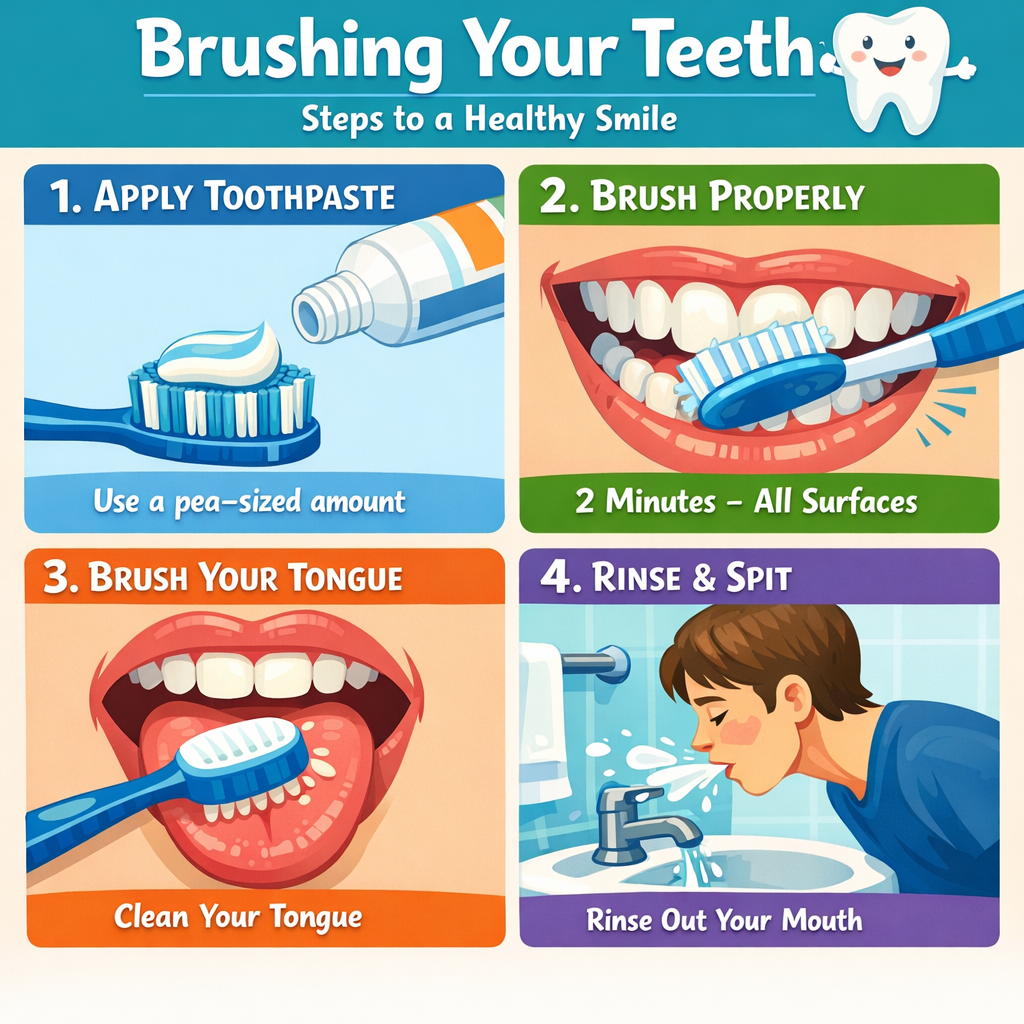
2. The Correct Brushing Technique – Step by Step
Preparation
- Wet your toothbrush with a little water to soften the bristles.
- Place the appropriate amount of toothpaste on the toothbrush (pea-sized).
- Make sure you have good lighting so you can see your mouth clearly.
The Bass Technique – The Most Effective Method
The Bass technique is the method recommended by most dentists worldwide, as it is particularly effective at removing plaque from the gum line area:
- Position the toothbrush at a 45-degree angle to the gum line.
- Make small circular or back-and-forth vibrating motions, focusing on the line between the teeth and gums.
- Brush systematically, spending about 3-5 seconds on each group of 2-3 teeth before moving on to the next.
- Divide your mouth into four quadrants (upper left, upper right, lower left, lower right) and brush each quadrant separately.
Step-by-Step Instructions for Each Area
Outer Surfaces
- Start with the back teeth on one side of the upper jaw.
- Position the toothbrush at a 45-degree angle to the gums.
- Make gentle circular or vibrating motions.
- Proceed systematically toward the front teeth and continue to the other side.
- Repeat the same process for the lower jaw.
Inner Surfaces
- For the inner surfaces of the front teeth, position the toothbrush vertically and make small up-and-down motions.
- For the rest of the inner surfaces, use the same Bass technique (45-degree angle and circular motions).
Chewing Surfaces
- For the surfaces you chew with, place the toothbrush flat on the teeth.
- Make gentle back-and-forth motions to clean the grooves of the teeth.
Tongue and Cheeks
- Gently brush the surface of the tongue from back to front to remove bacteria and prevent bad breath.
- Also brush the inner surfaces of the cheeks with gentle movements.
Completion
- Brush for a total of 2 minutes. Many dentists recommend using a timer or an electric toothbrush with a built-in timer.
- Rinse your mouth well with water to remove toothpaste and debris.
- Clean your toothbrush by rinsing it well with water.
- Store your toothbrush upright in an open area to air dry.
3. How Often You Should Brush Your Teeth
According to the Hellenic Dental Federation and the World Dental Federation, the recommended brushing frequency is:
- At least twice a day: Once in the morning and once before bed.
- Ideally after every meal: If possible, brush your teeth 30 minutes after each meal. Brushing immediately after consuming acidic foods can damage tooth enamel.
- Important note: Brushing your teeth before bed is particularly important, as saliva production decreases during sleep, making teeth more vulnerable to bacterial attack.
Special Cases
- After consuming sugary foods/drinks: It’s a good idea to brush your teeth or at least rinse your mouth with water.
- During illness: Replace your toothbrush after an illness to avoid reinfection.
- During pregnancy: Pregnant women should pay special attention to their oral hygiene due to hormonal changes that can affect gum health.
4. Common Brushing Mistakes to Avoid
Technique Mistakes
- Horizontal brushing: Hard horizontal brushing can cause damage to tooth enamel and gum recession.
- Excessive pressure: Brushing hard doesn’t clean teeth better and can cause damage to the gums and enamel.
- Rushed brushing: Brushing for less than 2 minutes doesn’t allow for a complete cleaning of all surfaces.
- Inconsistent brushing: Skipping areas of the mouth or not brushing systematically.
- Ignoring inner surfaces: Many people focus mainly on the outer surfaces of the teeth, neglecting the inner ones.
Equipment Mistakes
- Using a worn-out toothbrush: A toothbrush with frayed bristles doesn’t clean effectively.
- Using a hard toothbrush: It can cause damage to the gums and tooth enamel.
- Improper toothbrush storage: Storing your toothbrush in a closed container promotes the growth of bacteria.
Habit Mistakes
- Brushing immediately after acidic foods: Wait at least 30 minutes after consuming acidic foods or drinks before brushing your teeth.
- Skipping the nighttime brushing: Brushing before bed is crucial for preventing bacterial growth overnight.
- Not flossing: Brushing alone cannot clean between teeth.
5. Special Cases and Adjustments
Brushing with Orthodontic Appliances (Braces)
If you wear braces, brushing your teeth requires extra care:
- Use a special orthodontic toothbrush with wavy bristles in the center for better cleaning around the braces.
- Brush both above and below the wires of the braces.
- Use interdental brushes to clean between the braces and teeth.
- Spend more time brushing, about 3-4 minutes.
- Use a fluoride mouthwash for extra protection.
Brushing for People with Sensitive Teeth
If you have sensitive teeth:
- Use toothpaste for sensitive teeth that contains potassium nitrate or other ingredients that reduce sensitivity.
- Choose a toothbrush with very soft bristles to avoid applying pressure to sensitive teeth and gums.
- Avoid extremely cold or hot temperatures when brushing.
- Brush gently but thoroughly to avoid further sensitization.
Brushing for Children
Educating children on how to brush their teeth correctly is vital:
- For children under 3: Use a tiny amount of fluoride toothpaste (the size of a grain of rice) and a soft-bristled children’s toothbrush.
- For children 3-6: Use a pea-sized amount of toothpaste. Children at this age need supervision and help.
- Make brushing fun: Use toothbrushes with colors or favorite characters, brushing games, or timing apps.
- Lead by example: Brush your teeth together with your child to show them the correct technique.
Brushing for the Elderly or People with Limited Mobility
- Electric toothbrushes can be easier to use for people with arthritis or limited mobility.
- Toothbrushes with modified handles or the use of special adapters can make gripping easier.
- Mouthwashes can provide extra protection if brushing is difficult.
6. Supplementary Practices for Perfect Oral Hygiene
Using Dental Floss
Dental floss is essential for removing plaque and food debris from areas where the toothbrush cannot reach:
- Use about 45 centimeters of floss, wrapping most of it around the middle finger of each hand.
- Hold 2-3 centimeters of floss tightly between your thumbs and index fingers.
- Gently insert the floss between your teeth with a zigzag motion, being careful not to injure your gums.
- Wrap the floss around each tooth in a C-shape and move it gently up and down, reaching below the gum line.
- Use a clean section of floss for each tooth.
- Repeat the process for all teeth, including the back surfaces of the last teeth.
- Frequency: Flossing is recommended at least once a day, ideally before nighttime brushing.
Using Mouthwash
Mouthwashes can supplement (but not replace) brushing and flossing:
- Choose the right mouthwash based on your needs:
- Mouthwashes with fluoride for added protection against cavities.
- Antimicrobial mouthwashes to reduce plaque and gingivitis.
- Mouthwashes for fresh breath.
- Follow the product instructions for the correct dosage and usage time.
- Use it after brushing and flossing, gargling for 30-60 seconds.
Cleaning the Tongue
Cleaning the tongue is equally important for complete oral hygiene:
- Use a special tongue cleaner or the back of your toothbrush if it has a special surface.
- Place the cleaner at the back of the tongue and gently pull forward.
- Rinse the cleaner between strokes.
- Repeat 3-4 times, covering the entire surface of the tongue.
Proper Nutrition
Diet plays a crucial role in oral health:
- Limit the consumption of sugar and processed foods, which feed the bacteria that cause cavities.
- Increase your intake of fruits and vegetables that contain natural fibers that help clean your teeth.
- Eat calcium-rich foods like dairy products, almonds, and dark leafy greens to strengthen your teeth.
- Drink plenty of water to rinse your mouth and maintain good saliva production.
Regular Visits to the Dentist
- Visit your dentist every 6 months for a professional cleaning and check-up.
- Don’t postpone visits even if you don’t feel any problems.
- Discuss any special needs or problems you may have with your dentist.
7. Frequently Asked Questions about Brushing Your Teeth
Is an electric toothbrush better than a manual one?
Research shows that electric toothbrushes, especially the oscillating-rotating type, can be more effective at removing plaque and reducing gingivitis compared to manual toothbrushes. However, a manual toothbrush is just as effective when used correctly. The choice is personal and depends on your preferences and needs.
How hard should my toothbrush be?
Most dentists recommend toothbrushes with soft to medium bristles. Hard bristles can cause gum injury and enamel wear, especially when brushing with excessive pressure.
Can I brush my teeth immediately after eating?
If you have consumed acidic foods or drinks, it’s best to wait at least 30 minutes before brushing your teeth. This is because acids temporarily soften tooth enamel, and brushing immediately afterwards can damage it. Instead, rinse your mouth with water or chew sugar-free gum to increase saliva flow.
Should I use toothpaste with fluoride?
Yes, fluoride is proven to be effective in preventing cavities by strengthening tooth enamel and making it more resistant to acids. Dentists recommend using fluoride toothpaste for all ages, adjusting the amount according to age.
How can I deal with bad breath?
Bad breath (halitosis) is mainly caused by bacteria found on the tongue and between the teeth. To deal with it:
- Brush your teeth regularly, including your tongue.
- Floss daily.
- Drink plenty of water to keep your mouth hydrated.
- Avoid strong-smelling foods like garlic and onion.
- Use an anti-halitosis mouthwash.
- Visit your dentist regularly, as chronic bad breath can be a symptom of other problems.
My children don’t want to brush their teeth. What should I do?
It’s a common problem for children to resist brushing their teeth. Try these strategies:
- Make brushing fun with games or songs.
- Allow children to choose their own toothbrush and toothpaste.
- Use brushing timer apps or videos for kids.
- Set a good example by brushing your teeth with them.
- Establish a reward system for consistent brushing.
Where should I store my toothbrush?
Your toothbrush should be stored upright in an open area where it can air dry. Avoid storing it in closed containers or drawers, as moisture promotes bacterial growth. Also, keep your toothbrush away from the sink and toilet to avoid contamination from splashes.
Conclusion: The Importance of Correct Brushing
Correct tooth brushing is fundamental to maintaining oral health and a bright smile. By adopting the right technique, using the correct tools, and following a consistent oral hygiene schedule, you can:
- Prevent cavities and gum disease
- Keep your teeth clean and healthy
- Ensure fresh breath
- Reduce the likelihood of expensive dental procedures
- Contribute to your overall health
Remember that investing a few minutes each day in brushing your teeth correctly can save you many hours and a lot of money on dental treatments in the future, while also helping you maintain a healthy, bright smile for a lifetime.
Finally, don’t forget that your dentist is your best ally in maintaining healthy teeth. In addition to regular visits for cleaning and check-ups, don’t hesitate to ask them for personalized advice and guidance for your own oral hygiene needs.
With these tips and techniques, you are now equipped with the knowledge to brush your teeth correctly and enjoy the benefits of excellent oral health. Start applying these practices today and you’ll see the difference!

 English
  Ελληνικά